
Trader Joe's: The Analytics Behind the Unexpected Success of Trader Joe's
Almost everything Trader Joe's does is unconventional in the grocery industry. We looked at the analytics behind what they're doing, where they're doing it, and why it's working.

Hi all - it’s Jordan here from The Analytics Behind. We create original research and content for business and analytics professionals that want to go a layer deeper on business & strategy topics with an analytics-led perspective. If you enjoy our work, we’d love for you to subscribe to get our weekly content directly to your inbox.
This Week We’re Asking…
How has Trader Joe’s defied the conventional grocer business model?
Where do they find success geographically?
Why have they been successful?
We’ll be touching on customer segmentation, competitive differentiation, and intelligent location planning.
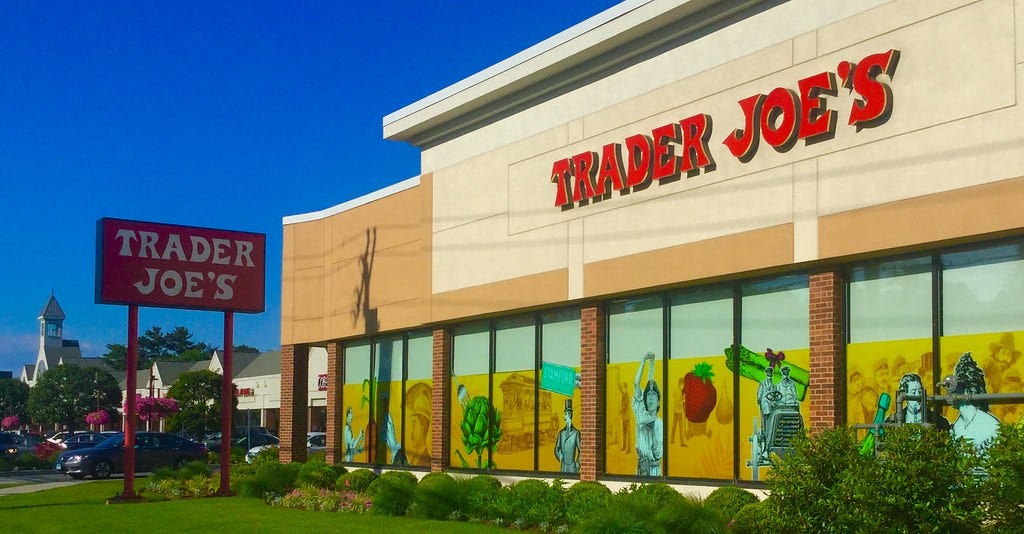
Have you ever been in a Trader Joe’s store? If you have, you’ve probably noticed it’s quite different than a traditional grocery store. It has quirky products, limited product selection, a smaller store format, and more.
Other than the fact that they sell food, almost nothing else about Trader Joe’s matches the experience of other grocery stores.
This made me wonder…
How can Trader Joe’s be so different - but still so successful - in the largely traditional grocery industry?
We’re going to look at the numbers and analytics behind what makes Trader Joe’s different, where they find success, and how they’ve honed in on their target customer.
Let’s start with what Trader Joe’s doesn’t do:
Almost no branded products
Little to no traditional marketing spend
No loyalty program
No discounts or product markdowns
Limited online presence and no online ordering
These largely defy logic in the industry. Kroger gets tremendous value from its loyalty program. Walmart has invested heavily in its online ordering infrastructure.
How is it possible that a retailer in 2023 - especially a grocer - has no loyalty program, limited marketing spend, and no eCommerce strategy?
How Trader Joe’s is Different - By the Numbers
Smaller Store Layout
Trader Joe’s stores are smaller and sell less SKUs than a traditional grocer.
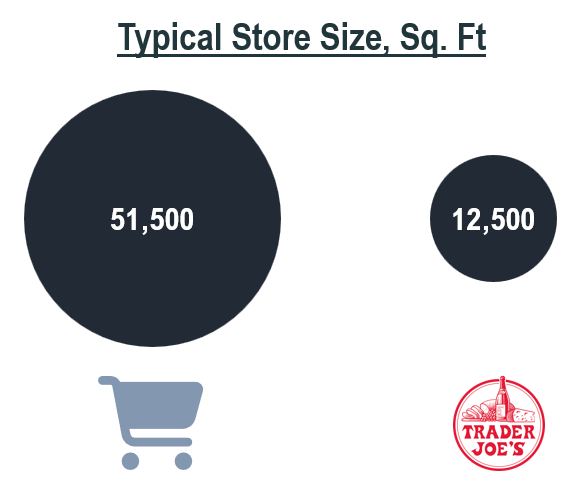
Their average store is 10,000-15,000 square feet, well below the average supermarket size of over 51,000.
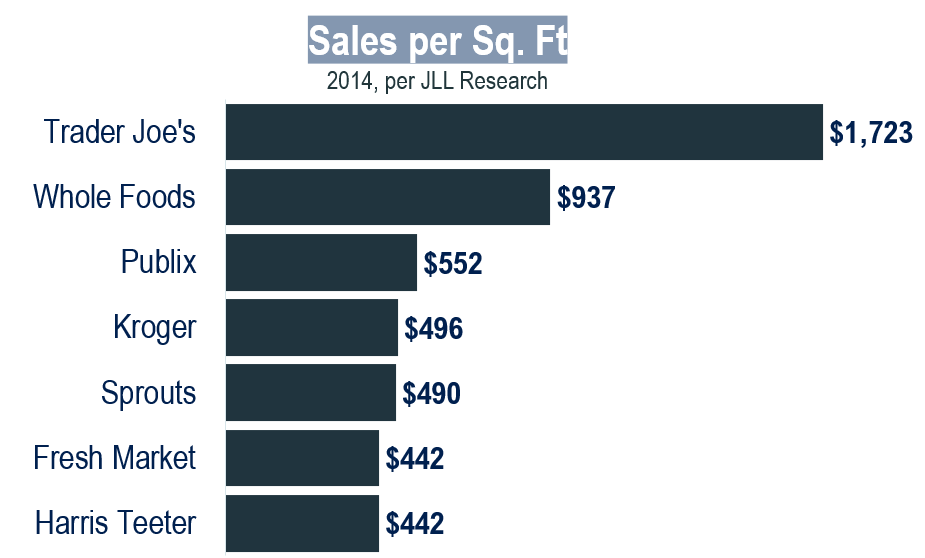
Despite this smaller design, reports are that Trader Joe’s dwarfs the competition when it comes to sales per square foot. Though dated to 2014, one report suggested that the brand sold twice as much as Whole Foods per square foot and well above other industry peers.
Limited Product Selection
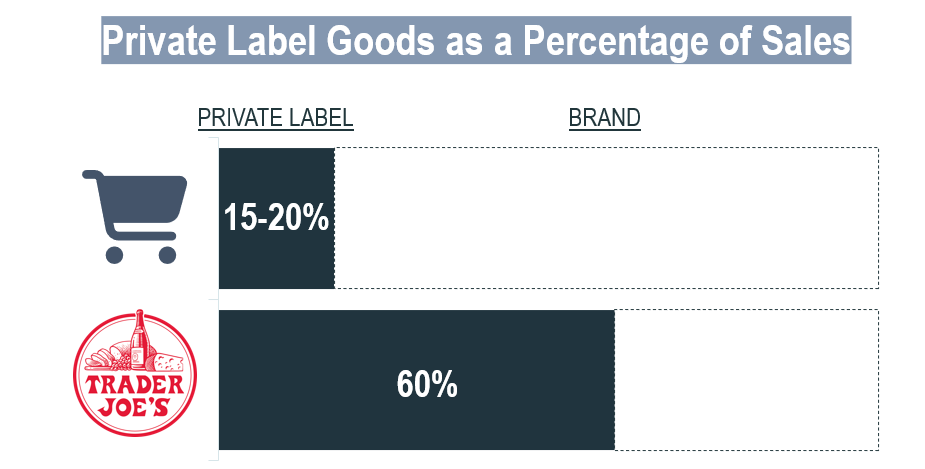
This is despite the fact that they sell almost predominantly private label goods. Brands survive on the premise that people will actively seek them out over cheaper private label alternatives. Trader Joe’s shows that high-quality private label products can be just as effective to a certain segment of the population as brands.
A traditional grocer gets about 15-20% of their sales from private labels. Trader Joe’s is estimated to generate ~60% of sales through its own store brands.
The products in a Trader Joe’s are designed to sell, not be exhaustive. By some estimates, Trader Joe’s stocks ~4,000 SKUs (unique products). A traditional grocer stocks upwards of 50,000 (!).
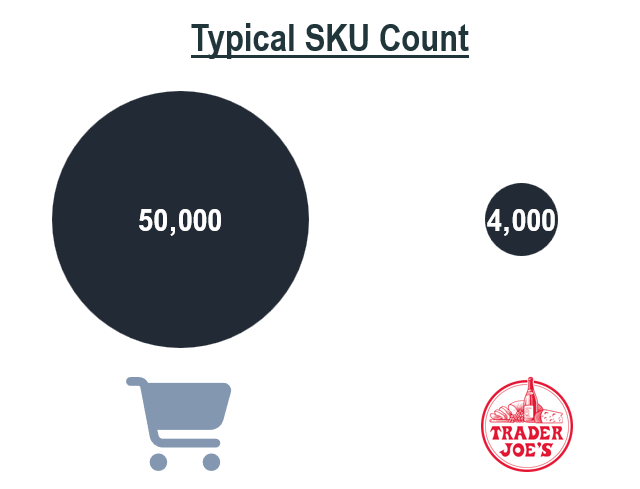
Simply put, Trader Joe’s stocks products that sell. I’ve frequently gone looking for an item that has since been discontinued. They’re more concerned about stocking products that move inventory than having every available product. This is likely a key reason behind the sales per square foot referenced earlier.
No Loyalty Program
Large grocers leverage loyalty programs and discounting to develop personalized advertisements, sell information back to brands, and give customers the feeling of “getting a deal” through markdowns.
Kroger - the owner of several large grocery brands - has gone so far with its use of loyalty, customer connections, and data science that it stood up its own data science company to support other brands.
The use and push for using a loyalty card is so strong that 96% of Kroger’s sales are connected to a loyalty account. The company believes that it can generate $1 billion in profit from “alternative businesses” which includes data operations and advertising.
All this to say - data & shopper insights are a critical part of the strategy for most major grocery brands.
Not at Trader Joe’s.
Trader Joe’s looks at product sales over people sales. To them, the important metric is what’s selling over who it’s selling to.
Why it Works
Trader Joe’s works because they have effective customer segmentation, competitive pricing, and organic customer loyalty.
Effective Customer Segmentation
Trader Joe’s knows who they’re going after and built a brand around them. In the founder’s book, he talks about going after people who are overeducated and underpaid. This guided their approach to product, store, location, and more.
Knowing that information, think again about the above information.
Does this customer segment care whether it’s a brand or private label?
Do they want to do the math on a loyalty card discount?
Do they want 15 options for a product or 2 high-quality ones?
These customers want good product at a value price and will trade off other parts of the grocery experience (selection, store size, etc.) to get it.
A brand that’s laser focused on who they serve and how to best serve them wins more often than the brand trying to serve everything to everyone.
Competitive Pricing
Trader Joe’s offers competitive prices to all customers all the time. It’s as simple as that.
One article found that a basket of representative goods were found to be 33% less than Stop & Shop while another puts Trader Joe’s at 19% cheaper than a traditional grocer.
The pricing delta can partially be explained by:
Lower overhead with smaller store sizes and less SKU complexity
The pricing advantage of private label goods
Private label goods are typically about 20% cheaper than branded goods
This model works because Trader Joe’s knows their target customer. It’s not about variety, it’s about value. Smaller stores, less variety, private label products, simpler operations. These all contribute to being able to offer a better price.
Organic Customer Loyalty
How often do you rave about a grocery store to a friend or co-worker? Probably not often.
Nevertheless, Trader Joe’s generates that type of excitement in its customer base.
They spend less on marketing because they deliver an exceptional customer experience, and people want to share that organically. In fact, their biggest marketing expense is passing out free food to customers in-store.
Their products are so differentiated and unique that they have organic social buzz and articles like the 50 Best Trader Joe’s Products.
Customers speak for the brand. This is among the most effective (and cheapest) forms of marketing a brand can have.
Where it Works
Trader Joe’s wants to reach people that are overeducated and underpaid. We looked at the numbers behind their typical store profile to characterize their location strategy and market reach.
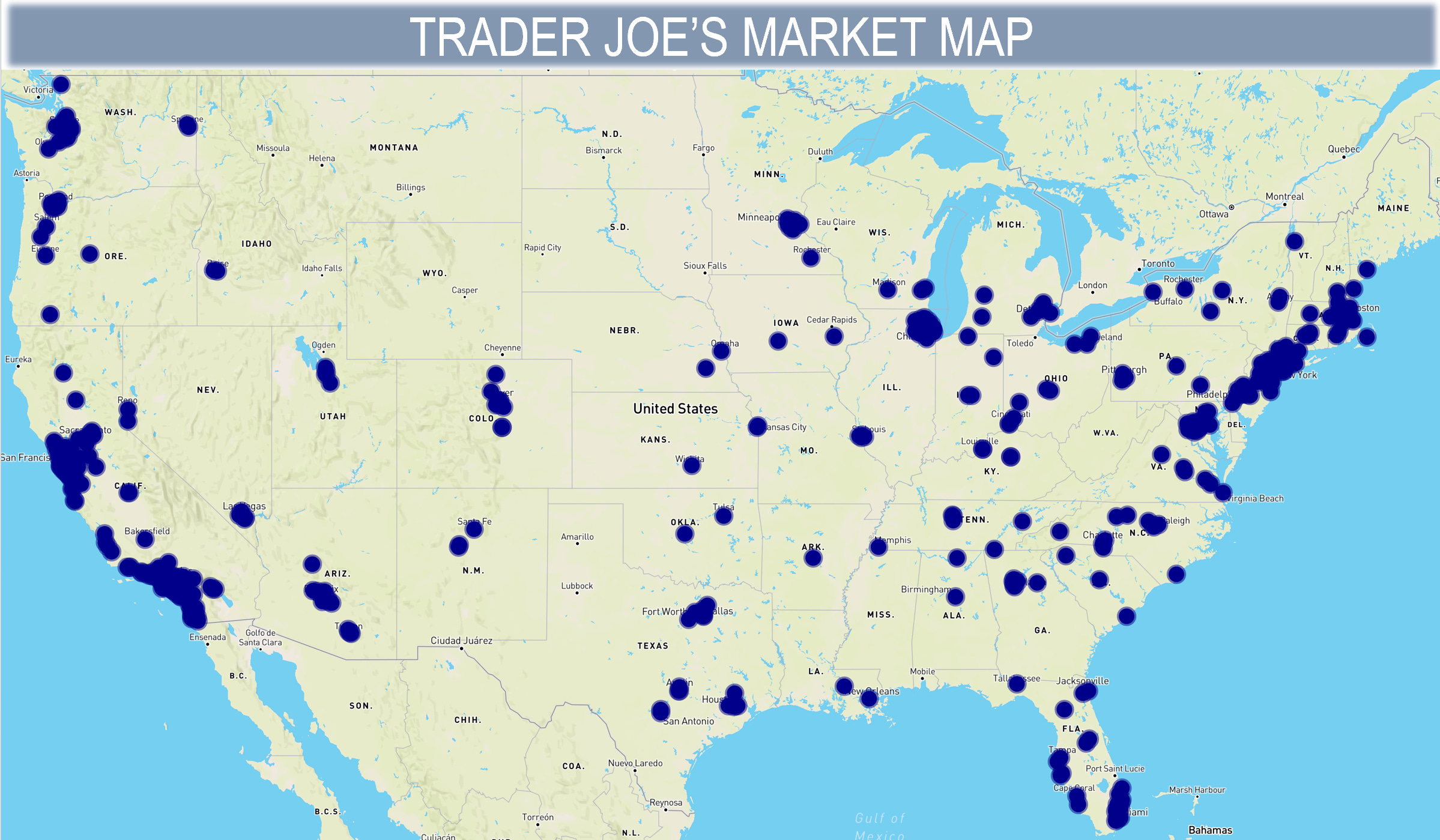
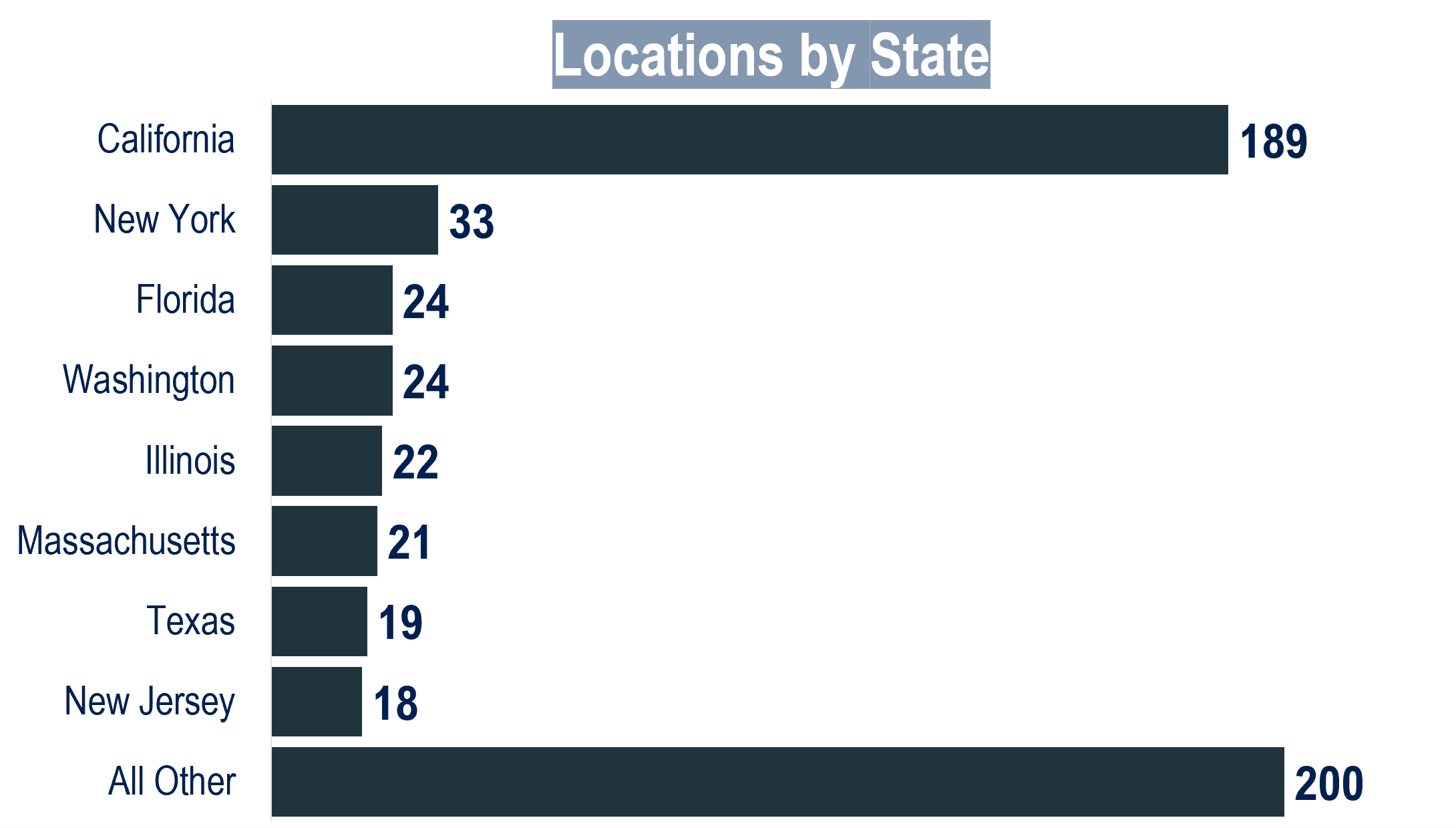
Trader Joe’s has 550 stores. Their top states by location count are California, New York, Florida, and Washington.
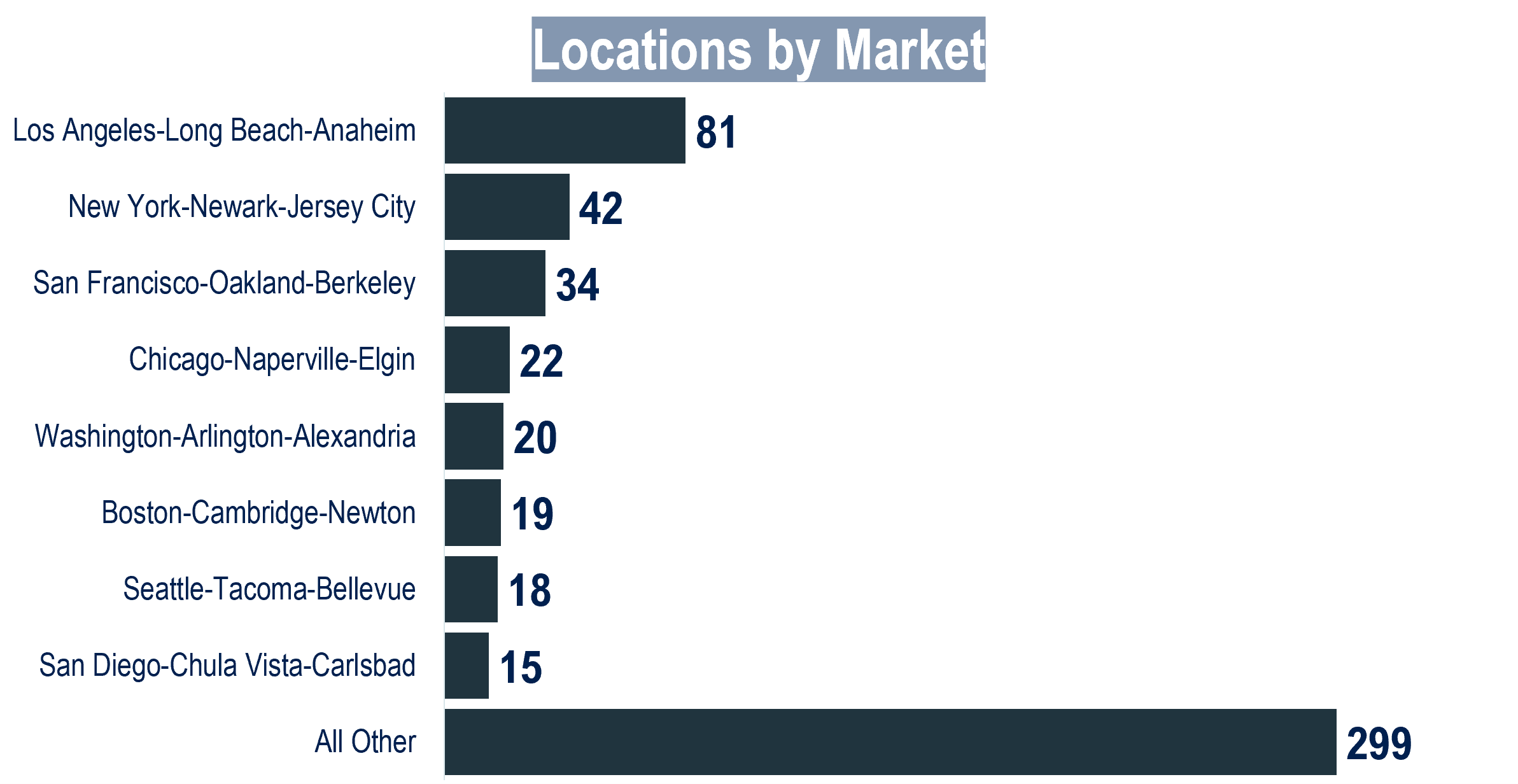
These stores are spread 134 urban-suburban markets with the highest counts in Los Angeles, New York City, San Francisco, and Chicago.
The area around a typical Trader Joe’s location - defined here as a 5-mile radius - is large, dense, and above average income.
Our analysis found the typical store has:
250,000 residential population
$91,000 household income
50% of adults with a bachelors degree or higher
140,000+ jobs
2.8% 5-yr population growth
This location profile fits their stated target market fairly well. The percentage of adults with a college degree is well above the national benchmark (~33%) and while the income is above average (not strictly speaking “underpaid”), it’s not as high as a premium grocer like Whole Foods.
Let’s zoom in on one market and show an example of their location strategy. In Boston, MA and its surrounding towns, Trader Joe’s has 14 locations.
These stores are more densely packed in the city center and spread out in the suburbs. Stores in the suburbs are near well-trafficked roads (highlighted in green / red) and in the city are in highly walkable locations like the Back Bay and Seaport neighborhoods.
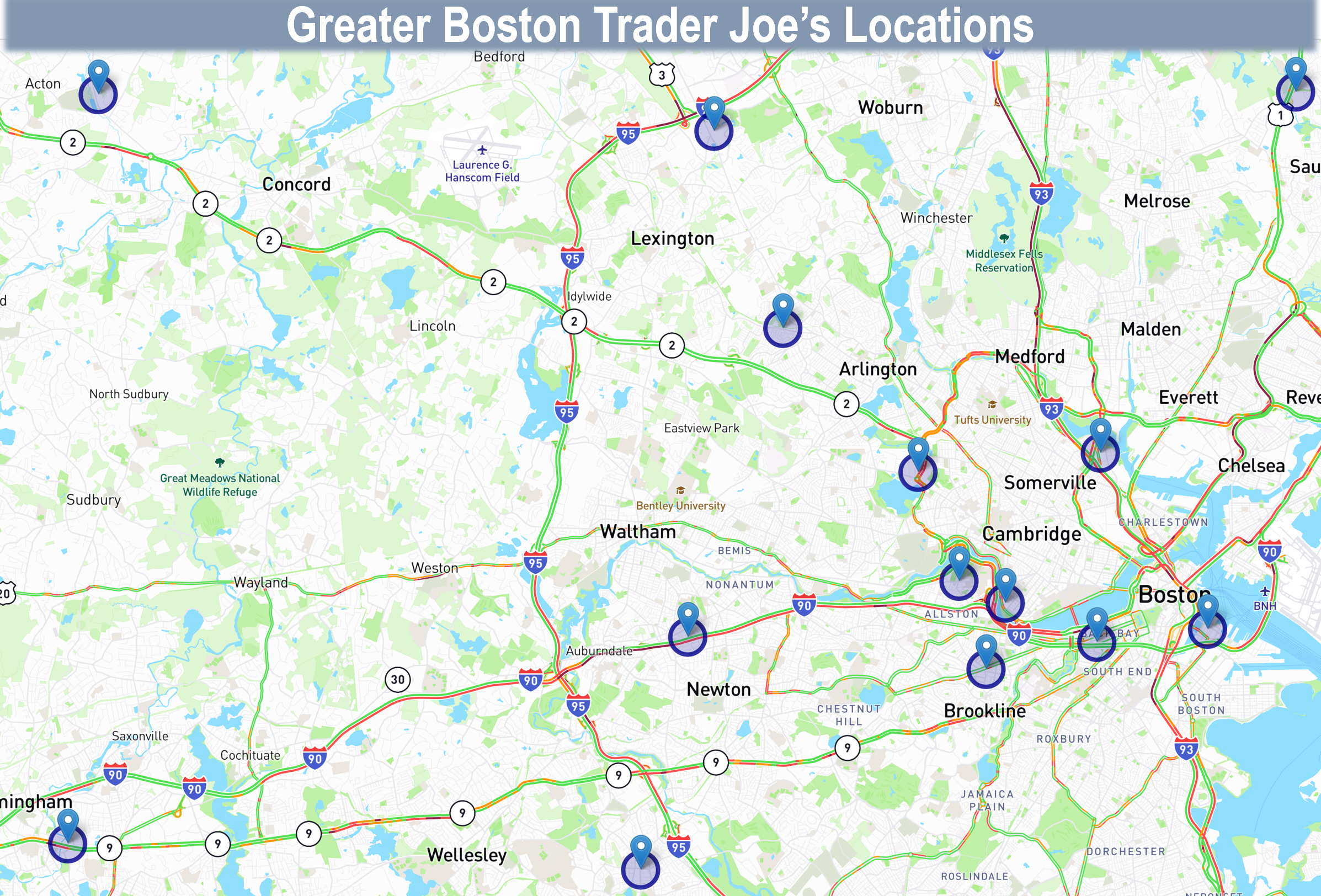
These stores are in areas that mirror their core demographic of educated, working, above average income households.
Final Thoughts
Most customers can feel the difference when going into a Trader Joe’s. The data & analytics plays out this difference too.
On nearly every industry metric, their profile differs dramatically from a traditional grocer. Nevertheless, it works. The brand is a clear case study that a good product at a fair price with a superior customer experience is a differentiator in any industry.
It’s not about how the competition is doing something, it’s about connecting with a core customer in the way they want to experience the product.
Like what you read? Support us by subscribing and getting our content right to your inbox every week!